These Are the Days, My Friend
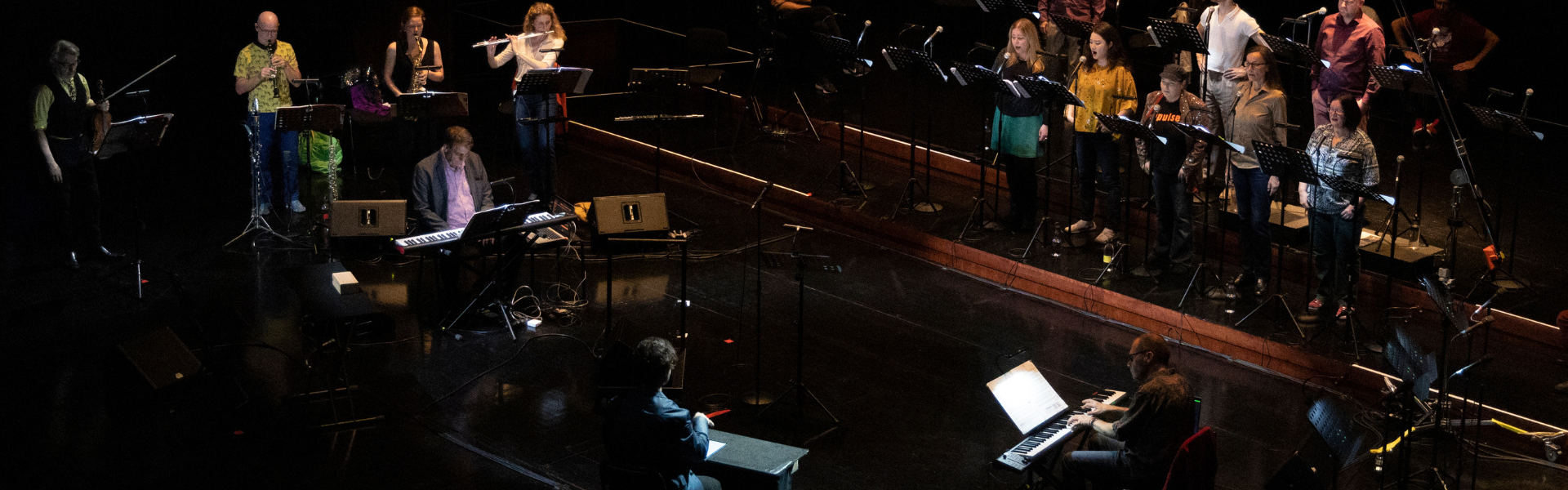
1976 did not announce itself as a revolution. It did not arrive with a manifesto or a clean break. And yet, somewhere between downtown New York and the European continent, something shifted. Not in what music said, but in what it did. Time, long treated as a neutral container, became material. Stretchable. Repeatable. Shareable.
Two works sit at the centre of that shift: Einstein on the Beach by Philip Glass and Music for 18 Musicians by Steve Reich. They do not look alike. One is an opera without a story, the other a concert piece without a climax. But they operate on the same premise: if you change how time is organised, you change how people listen, and, quietly, how they are together.
Glass and Wilson did not set out to tell the story of Einstein. They stripped opera of its usual anchors: plot, character, psychological arc. What remains is counting, pulse, repetition. Numbers spoken aloud. Musical figures returning, slightly altered. Images that do not explain themselves. The result is not narrative, but accumulation, a musical trip.
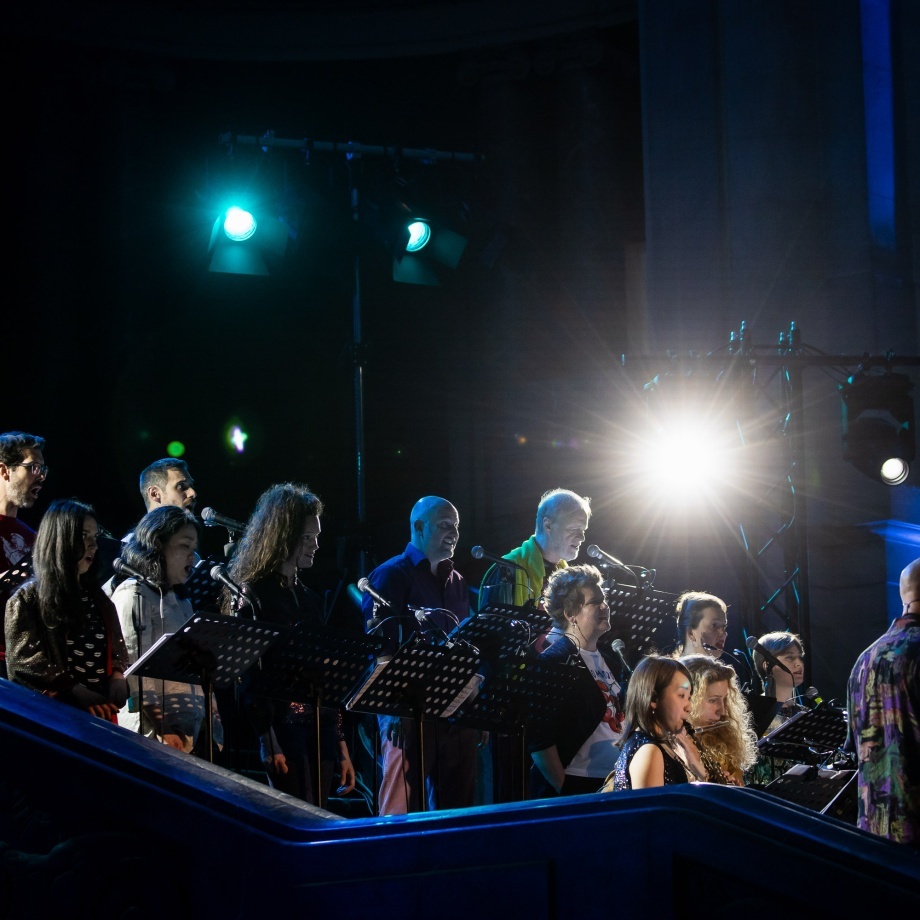
Reich, working in parallel, arrives at a similar place by different means. Music for 18 Musicians begins with a cycle of chords that unfold, expand and return. Eighteen performers sustain a constant pulse while voices and winds breathe across it. Patterns repeat, but never quite the same way. The music does not progress towards a goal. It circulates, builds, recalibrates. What changes is not the material, but your perception of it.
Both works ask for something that now feels quite radical: time without interruption. Not as an endurance test, but as a condition. Stay long enough, and something shifts. Attention loosens, then sharpens. What seemed static begins to move. What felt abstract becomes physical.
Fifty years later, this question lands differently. We live in a culture of permanent refresh. Everything updates, scrolls, fragments. Time is no longer stretched, but sliced. The idea of staying with something, without immediate payoff, has become unfamiliar. And yet, perhaps because of that, these works feel newly precise.
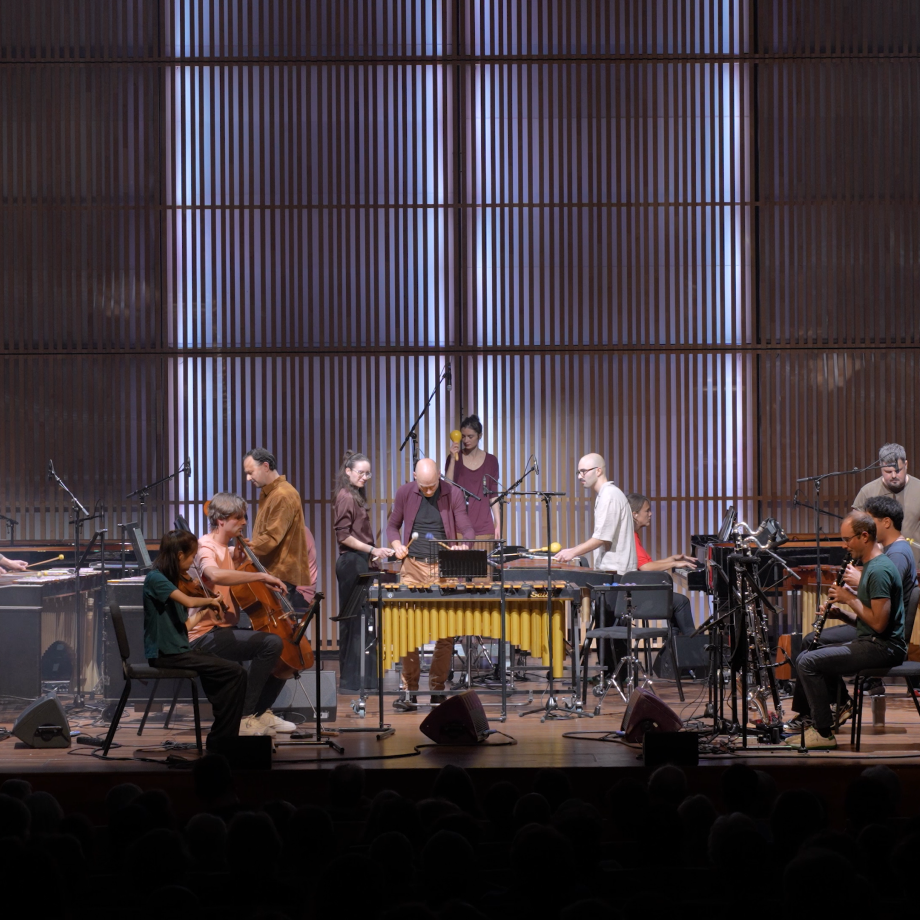
Einstein on the Beach does not demand that you understand it. It asks that you remain. You can enter, leave, return. The structure holds regardless. In this performance, Collegium Vocale Gent and Ictus take on that structure collectively. The music requires exact counting, sustained focus, constant alignment. It is exacting, but never rigid. It breathes because they do.
Into this framework enters Moor Mother. Working across poetry, hip hop and experimental sound, she treats language as material. Her voice does not follow the patterns. It presses against them. It cuts, interrupts, insists. Where the original text hovers between sense and abstraction, she grounds it in the present tense. The effect is immediate. The work is no longer suspended in time. It is here. Now.

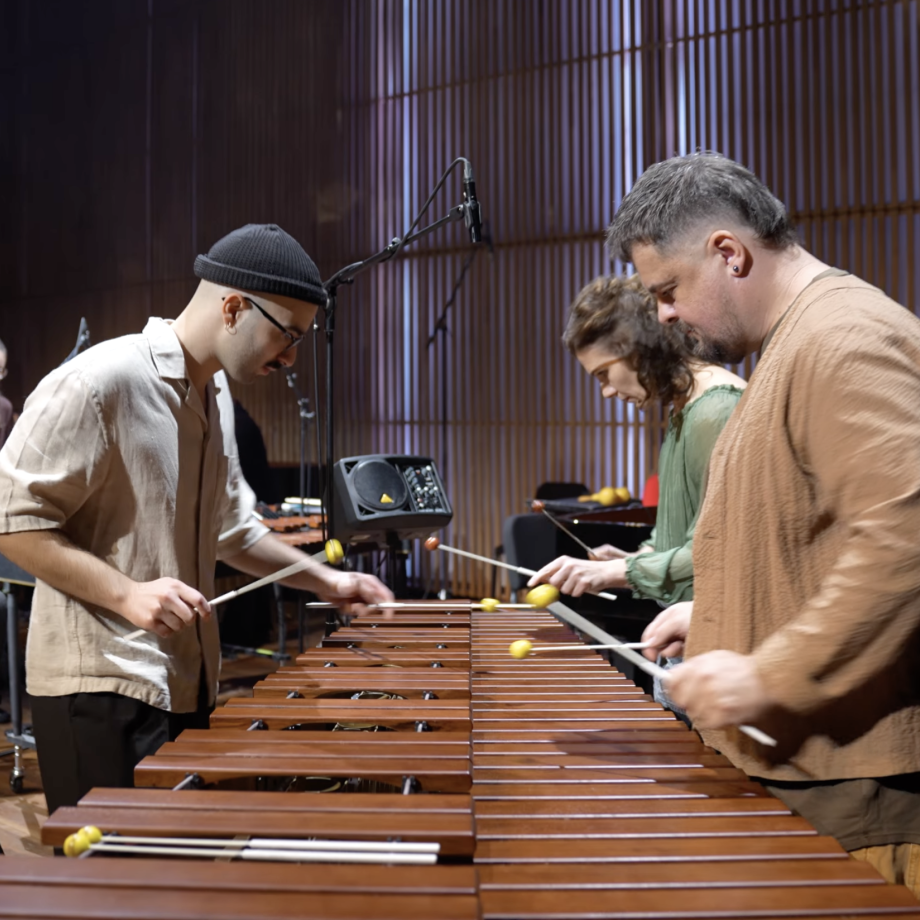
If Einstein stretches time, Music for 18 Musicians locks into it. The pulse is constant, almost architectural. Pianos, percussion, voices and winds interlock with such precision that the music feels both mechanical and alive. It is easy to hear why this piece continues to resonate far beyond the concert hall. Its logic is close to that of the club: repetition as propulsion, variation as intensity, duration as immersion. Proto-techno, long before the term existed.
Performed by Het Muziek, HIIIT and Storm in a Jar, the piece becomes exactly what it proposes: a shared field of attention. Nothing is hidden. Every entry, every shift, every breath is part of the surface. The music does not build towards a climax. It sustains a state. An inviting flow that pulls you in, where staying outside is no longer an option.
Seen together, these two works do not belong to the past. They describe a condition that feels increasingly urgent. How do we share time? How do we remain present, together, without distraction, without the need for constant resolution?
“These are the days, my friend.” The line appears in Einstein on the Beach almost casually, a fragment among many. But it lingers. Not as nostalgia, but as a statement of fact. These days, now, are shaped by the same question as in 1976. Only the context has changed. The stakes have not.
On 16 September, Einstein on the Beach unfolds in Ghent. On 26 September, Music for 18 Musicians takes hold. Two entries into the same field. Two ways of organising time, attention and presence.
No need to choose. Step in. Stay a while. Time may not behave the way you expect.